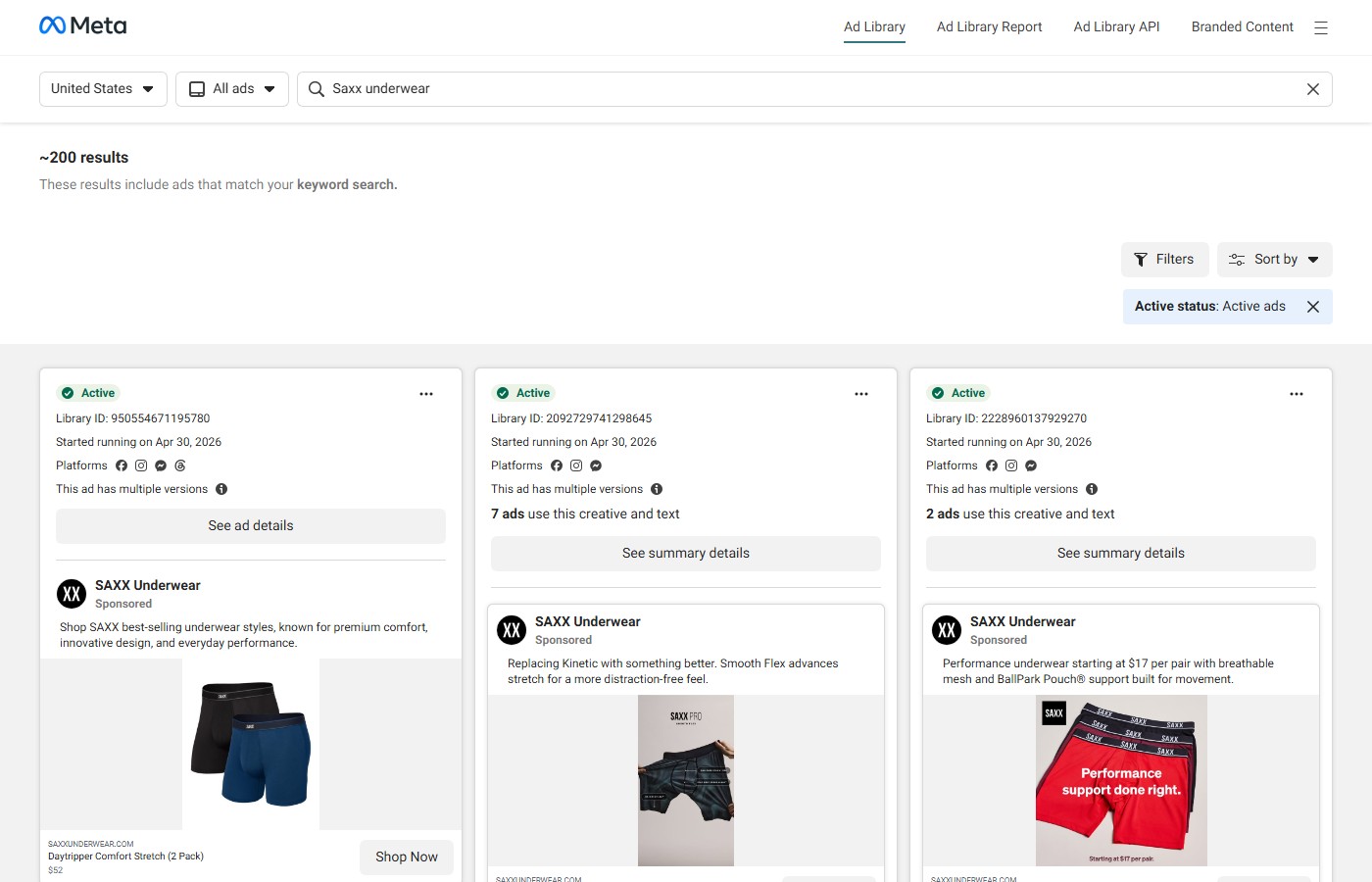
Shop SAXX best-selling styles — premium comfort, innovative design.
Teardown
"Shop SAXX best-selling underwear styles, known for premium comfort, innovative design, and everyday performance." SAXX leads with "best-selling" as a trust shortcut in a category where the purchase decision is unusually private. Men don't typically seek advice on underwear, don't post about it, and default to brand inertia (whatever they bought last time, or whatever was in the three-pack their mother chose in 2003). Breaking that inertia requires reducing perceived risk, and "best-selling" does that efficiently: if many other men have already made this choice and returned for more, the reader doesn't have to be the pioneer.
The pairing of "premium comfort" and "innovative design" is intentional sequencing. Comfort is the most common underwear purchase motivator; innovation is the justification for paying more than $15 for a three-pack. SAXX's key product innovation — the BallPark Pouch™, a hammock-like internal support system designed to prevent chafing and shifting — is not named in this particular ad, but it is implied by "innovative design." For existing customers, that phrase calls the technology to mind. For new customers, it signals that something is different about the construction without requiring a clinical explanation in a 30-second scroll-stop window.
"Everyday performance" is an expansion of the brand's vocabulary beyond athletic contexts. SAXX launched as a technical performance underwear brand for outdoor sports, and its early marketing leaned hard into activity-specific messaging. "Everyday performance" broadens the qualified audience from athletes to anyone who is on their feet, commuting, or simply wants to get through a workday without adjusting their clothing. This is the same category expansion logic that drove Lululemon from yoga studios to airports.
The men's underwear DTC space — SAXX, Tommy John, MeUndies, Mack Weldon, Pair of Thieves — competes on three axes: fit technology, materials quality, and brand personality. SAXX's entry price points (typically $28–$40 per pair) position it above mass retail but below premium fashion. The "best-selling" anchor does the work of social proof that paid athlete endorsements would do for a more aspirationally positioned brand — and it does it without the credibility dilution that comes from associating a functional product with a celebrity who was paid to wear it.