10% off Oura Ring 4 for students
Teardown
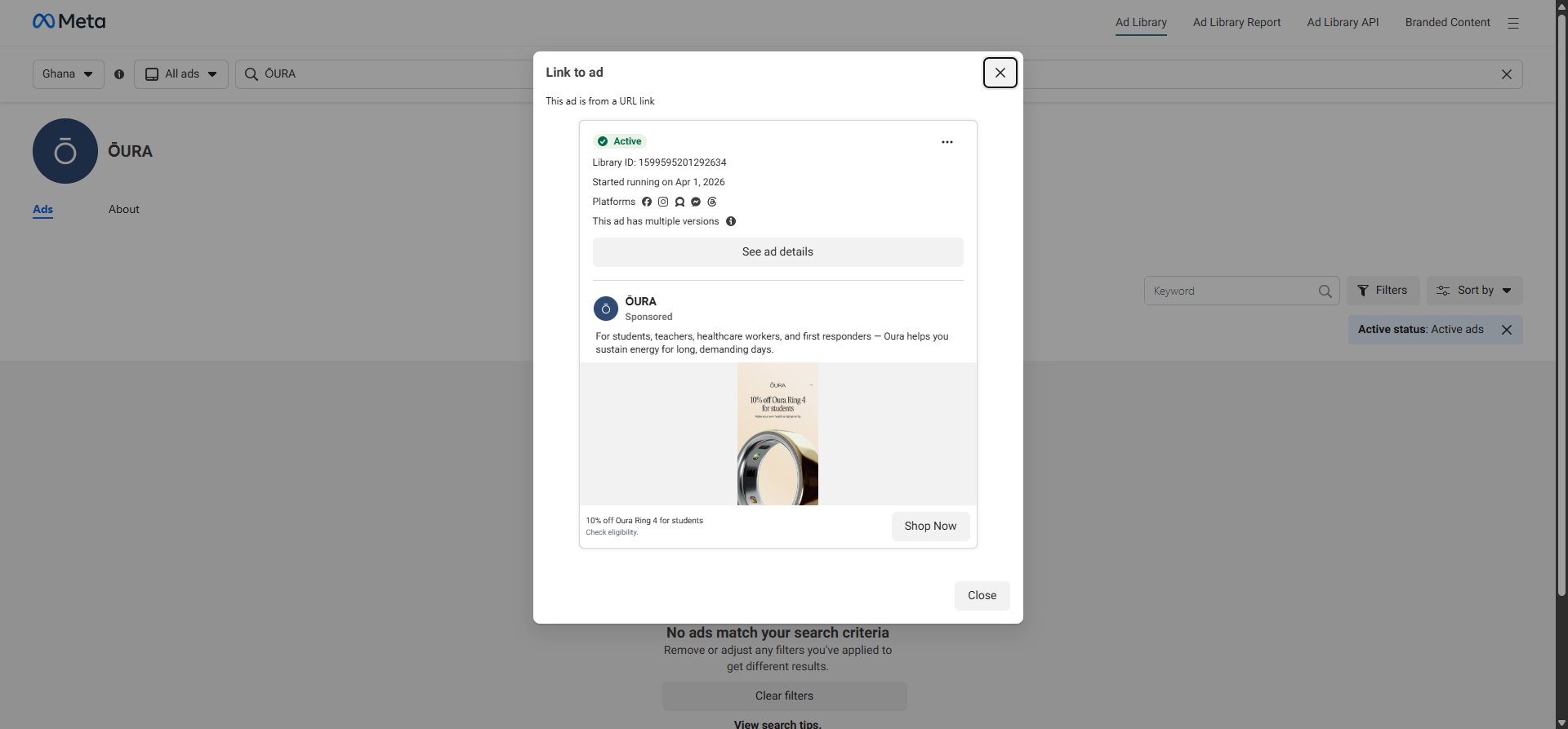
"For students, teachers, healthcare workers, and first responders — Oura helps you sustain energy for long, demanding days." The opening sentence does four things at once: it names four specific occupations, it implies high cognitive and physical demand, it names the product benefit (sustained energy), and it builds a category of people who share a characteristic (they operate under sustained pressure for others). The list is not arbitrary. Each group has something in common with the others: irregular sleep, sustained stress exposure, and cultural barriers to prioritising personal health. Oura is not selecting these audiences because they have high disposable income — it's selecting them because they have the clearest possible use case for a continuous health monitor, and because the offer (10% off) converts the targeting into something tangible.
The "10% off for students" mechanic sits in the headline and is verified by "Check eligibility" in the link description. That phrase is doing important structural work. It tells the viewer that the discount is real but gated, which creates a small qualifying action ("check eligibility") rather than a soft CTA. Qualifying actions tend to attract higher-intent clicks: the person who clicks "check eligibility" is actively confirming they belong to the offer group, which pre-qualifies them on the landing page. The discount itself — 10% off an $300 device — is modest in absolute terms but large enough to signal that Oura is willing to invest in category adoption among these groups specifically.
The creative shows the Ring 4 against a clean, warm-neutral background in the style of a premium accessories brand rather than a health device brand. There is no graph, no readout, no app screenshot. Oura has consistently differentiated itself from WHOOP and Fitbit by positioning the ring as a jewellery-adjacent everyday object rather than a sports device. The product shot reinforces that positioning: this is something you'd wear on a date, not only at a race.
The headline combines the discount with the specific product name ("Oura Ring 4") and the audience identifier ("for students") in a single line. This structure creates immediate relevance — a student scrolling their feed who sees "10% off Oura Ring 4 for students" knows within three words whether the ad applies to them. The specificity is the targeting mechanic expressed in copy form, which compounds the platform's audience-matching with a self-identification filter inside the creative itself. If the ad targets anyone outside those four occupations, the copy still works: it signals that Oura runs structured discount programmes, which builds brand credibility for audiences who don't qualify for this one.