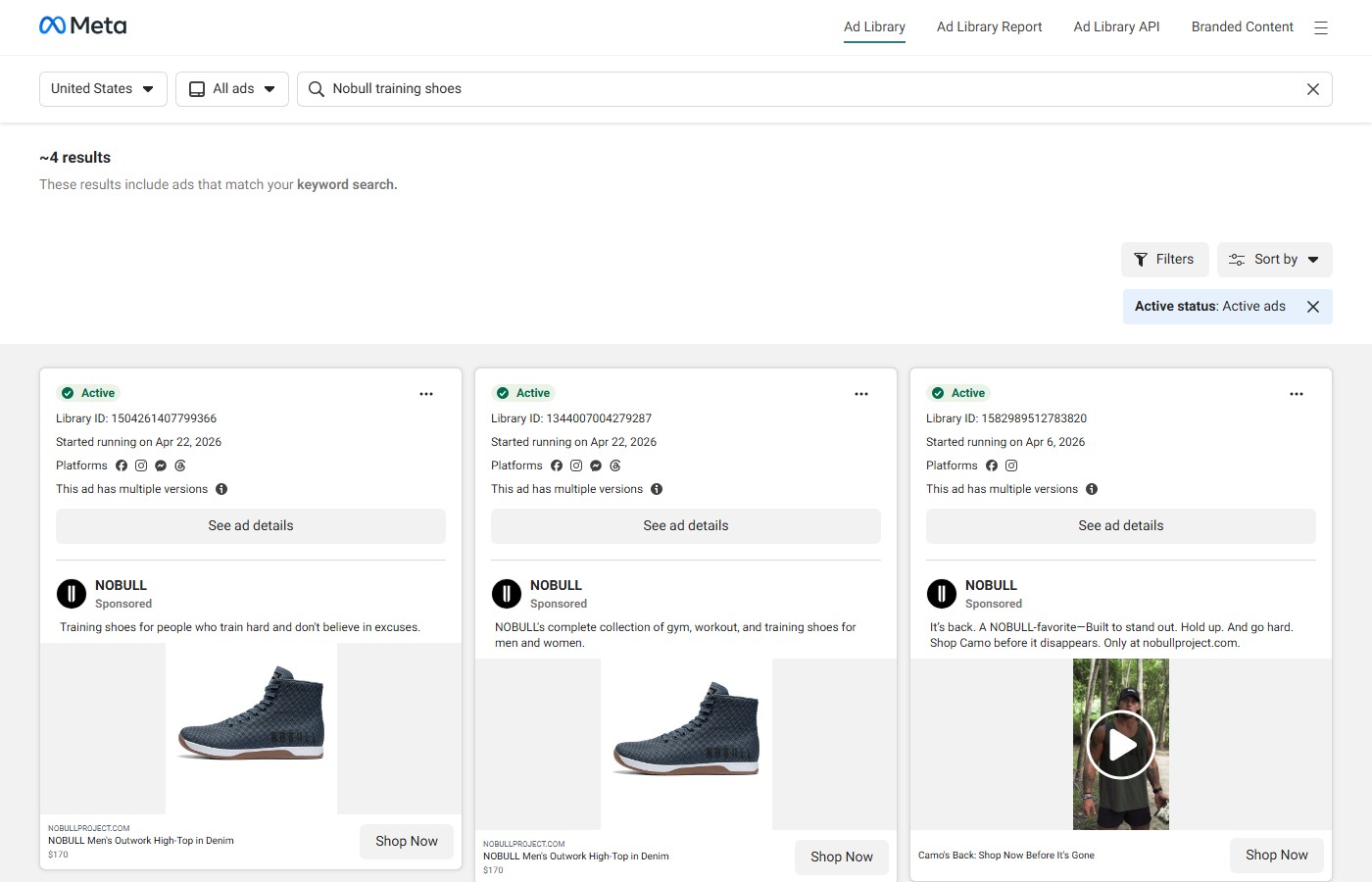
Training shoes for people who train hard and don't believe in excuses.
Teardown
"Training shoes for people who train hard and don't believe in excuses." NOBULL's brand name is the entire positioning strategy compressed into two syllables. The ad doesn't bother explaining the name because it doesn't need to. The headline operates as a mirror: if you see yourself in "people who train hard and don't believe in excuses," this shoe is for you. If you don't, NOBULL is explicitly not for you. That exclusivity is the point.
The "no excuses" framing is a rejection of a specific competitor behavior: the athletic footwear industry's habit of selling performance equipment as a substitute for effort. Marketing language like "engineered for speed," "reactive cushioning," and "propulsion technology" implies the shoe does the work. NOBULL's ad takes the opposite position — the shoe does nothing except show up for the person who already shows up. This is a character alignment play, not a technology play.
The URL — NOBULLPROJECT.COM — carries the brand philosophy into its digital address. "Project" connotes ongoing commitment, continuous building, work that is never finished. A shoe brand that calls itself a project is signaling that the brand, like the athlete, is always in progress. The domain name is a marketing decision as much as a web infrastructure decision.
NOBULL launched in 2015 as a CrossFit training shoe at a time when the category was dominated by Nike's Metcon and Reebok's Nano — both established brands making heavy investments in CrossFit sponsorships. NOBULL's counter-move was to make no formal sponsorship deals and to sell directly to the CrossFit community through a word-of-mouth and affiliate model. The lack of athlete endorsements was itself the brand message: NOBULL doesn't need to borrow a champion's credibility because it's not selling championships. It's selling the shoe you wear to the 5:30 AM box class when nobody is filming.
"Training shoes" in the headline rather than "cross-training shoes" or "CrossFit shoes" is a deliberate broadening. As NOBULL has expanded beyond its CrossFit base into running, tennis, and lifestyle markets, the simpler descriptor keeps the brand relevant to people who train outside functional fitness. The shoes remain expensive (typically $139–$165), which filters for buyers who take their training seriously enough to invest in purpose-built footwear — exactly the buyer the "no excuses" positioning is designed to attract.