The Play Kits by Lovevery
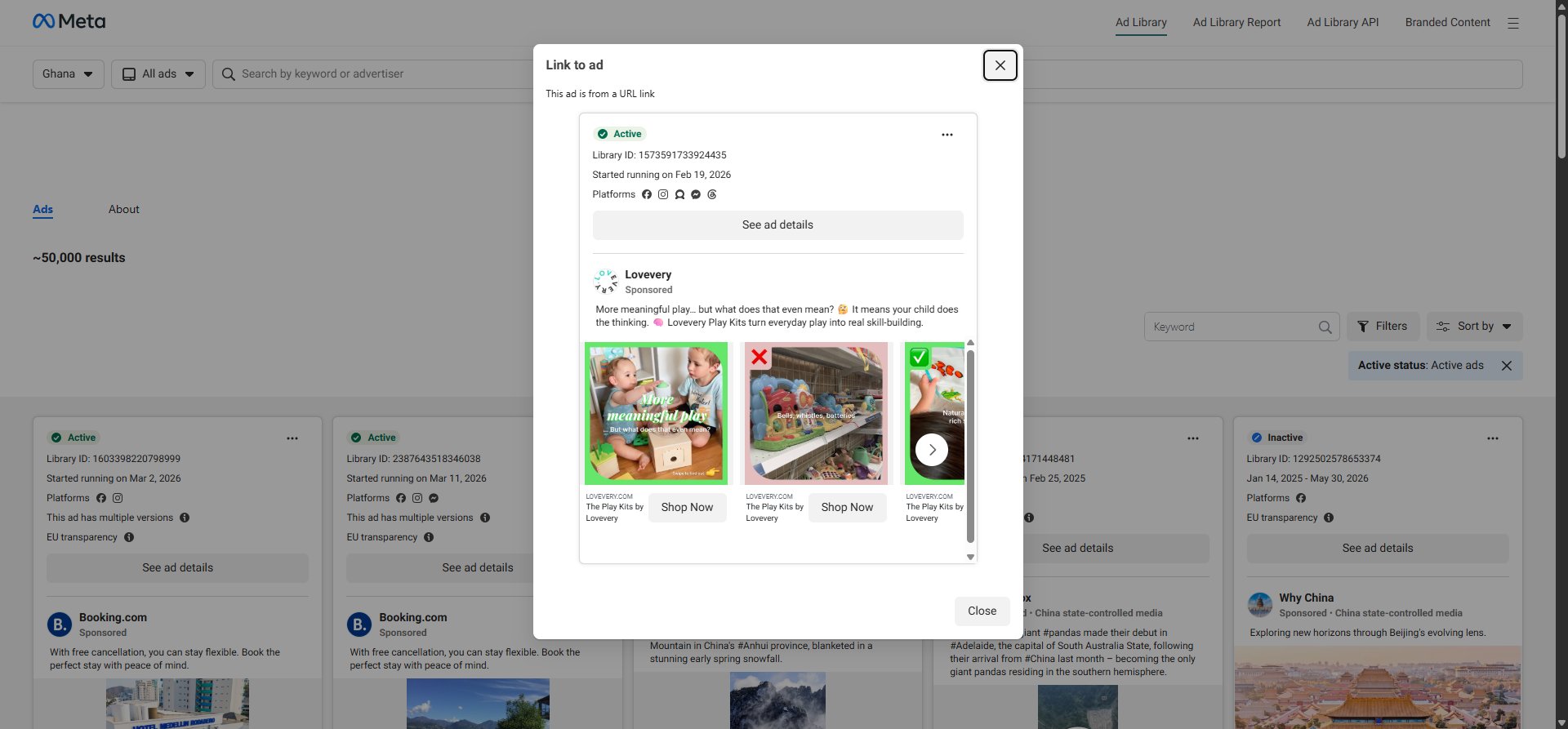
Teardown
"More meaningful play... but what does that even mean?" The ellipsis before the question is an intentional pause that mimics spoken reflection. The ad is not asserting "meaningful play" as a given — it's raising the question itself, which does two things simultaneously. It acknowledges that the phrase "meaningful play" has become category noise in the parenting product space (everyone from Fisher-Price to Melissa & Doug has used the word "meaningful"), and then immediately offers to define it on Lovevery's terms. The question mark is an invitation to keep reading. Most advertising asserts. This ad interrogates.
The answer arrives in the next line: "It means your child does the thinking." This is a complete and novel definition of meaningful play in five words. The claim is pedagogically substantiated — it aligns with Montessori principles and constructivist learning theory, where child-directed discovery produces deeper learning than adult-guided instruction. But Lovevery doesn't cite Montessori or academic research in the copy. Instead, it delivers the principle in plain language and trusts the parent to recognize it as true from their own experience of watching children learn. That trust in the audience's intuition is a form of respect that builds brand authority without performing expertise.
"Lovevery Play Kits turn everyday play into real skill-building." The word "everyday" is the bridge between the philosophical claim (child does the thinking) and the product claim (our kits support that). It says: you don't need to construct a special learning environment or commit a dedicated hour to educational play. The toys work during the time your child would already be playing. This removes the effort objection that educational toy positioning often creates — parents don't want to feel like they're adding homework to playtime.
The carousel format is functionally appropriate for Lovevery's product. The Play Kits are age-segmented (The Looker, The Charmer, The Seer, etc.) and a carousel allows different kit stages to appear in a single unit, communicating that the product line follows the child's development over time rather than offering a one-time purchase. The "Shop Now" CTA across multiple panels is consistent but low-pressure — it is an invitation to browse rather than a single closing moment. Lovevery's average order value and subscription LTV are high enough that the brand can afford a consideration cycle longer than a single ad impression. This carousel is designed to generate brand recall and intent, not immediate single-click purchase.