Stop washing your dishes with microplastics
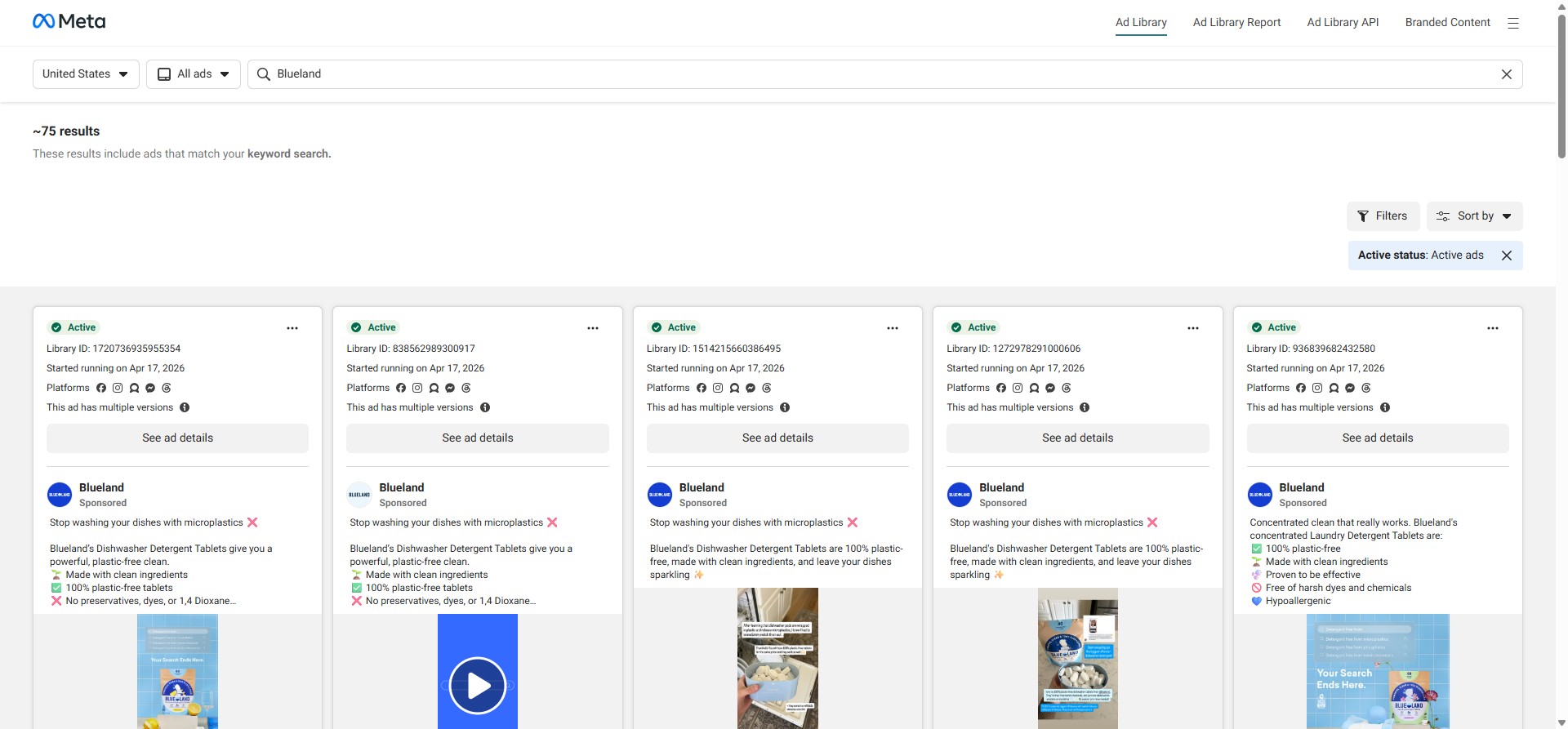
Blueland's Dishwasher Detergent Tablets give you a powerful, plastic-free clean. Made with clean ingredients. 100% plastic-free tablets. No preservatives, dyes, or 1,4 Dioxane. Proven effective.
Shop NowTeardown
Blueland's "Stop washing your dishes with microplastics" is a headline that works by making the consumer the agent of a harm they didn't know they were committing. Most cleaning product advertising frames the dirt, grime, or bacteria as the antagonist. Blueland's creative reframes the conventional cleaning product itself as the harm — meaning the very act of cleaning has been causing contamination that transfers to the dishes, the food, and ultimately the consumer. This is category-crisis advertising: it doesn't compete with Cascade or Finish on cleaning performance, it makes the act of using any conventional dishwasher detergent feel irresponsible.
The microplastics framing is scientifically grounded and culturally resonant. Research on microplastic contamination in food, water, and household products has entered mainstream awareness. Blueland is not introducing a new fear; it is connecting an existing anxiety (microplastics in the environment and in bodies) to a specific daily behavior the consumer controls. This is effective because it converts a diffuse, systemic concern into an actionable individual choice. The consumer can't fix ocean plastic pollution by changing a shopping decision, but they can stop washing their dishes with microplastics by switching to Blueland. Specificity of action produces higher conversion than generalized environmental concern.
"Made with clean ingredients. 100% plastic-free tablets. No preservatives, dyes, or 1,4 Dioxane" is a structured negative-ingredient list that builds trust through disclosure. The mention of 1,4 Dioxane — a synthetic chemical byproduct common in many cleaning products — is notable because it names a specific harm most consumers have never heard of and immediately positions Blueland's absence of it as a differentiating feature. Brands that educate their customers about chemical names build a deeper trust than brands that rely on positive benefit claims. A buyer who learns what 1,4 Dioxane is from Blueland's advertising will check for it going forward, which is a durable competitive advantage for the brand.
The "Proven effective" closing is important because sustainability-positioned cleaning brands face a persistent objection: that natural or plastic-free formulations don't clean as well as conventional products. "Proven effective" is a compressed authority claim that addresses this objection without expanding into technical proof in the ad copy itself. The click-through and product page carry that proof. The ad's job is to establish that Blueland is not asking the buyer to sacrifice cleaning performance for environmental virtue — both are available in the same product.
The visual design of the dishwasher tablet itself reinforces the brand positioning. Tablets rather than liquid or powder signals precision, portioned dosing, and reduced packaging waste simultaneously. The format is a product shot that lets the tablet's clean, minimal design carry the premium signal. Blueland has built a visual identity around packaging that looks good in kitchens — the tablets, the starter kits, the glass bottles are designed to be left out on countertops, which turns the product into an ambient brand signal for every guest who sees it. This is DTC brand-building through product design rather than advertising alone.
The multi-version ad strategy visible in the library listing — Blueland is running several variants of the same campaign simultaneously — is consistent with a mature Meta acquisition strategy that tests different copy variations against shared audiences to optimize conversion rate at scale. The campaign architecture suggests Blueland is in a growth phase where conversion rate improvement has a significant dollar impact on blended customer acquisition cost.