Clean ingredients. Visibly whiter teeth. Zero waste.
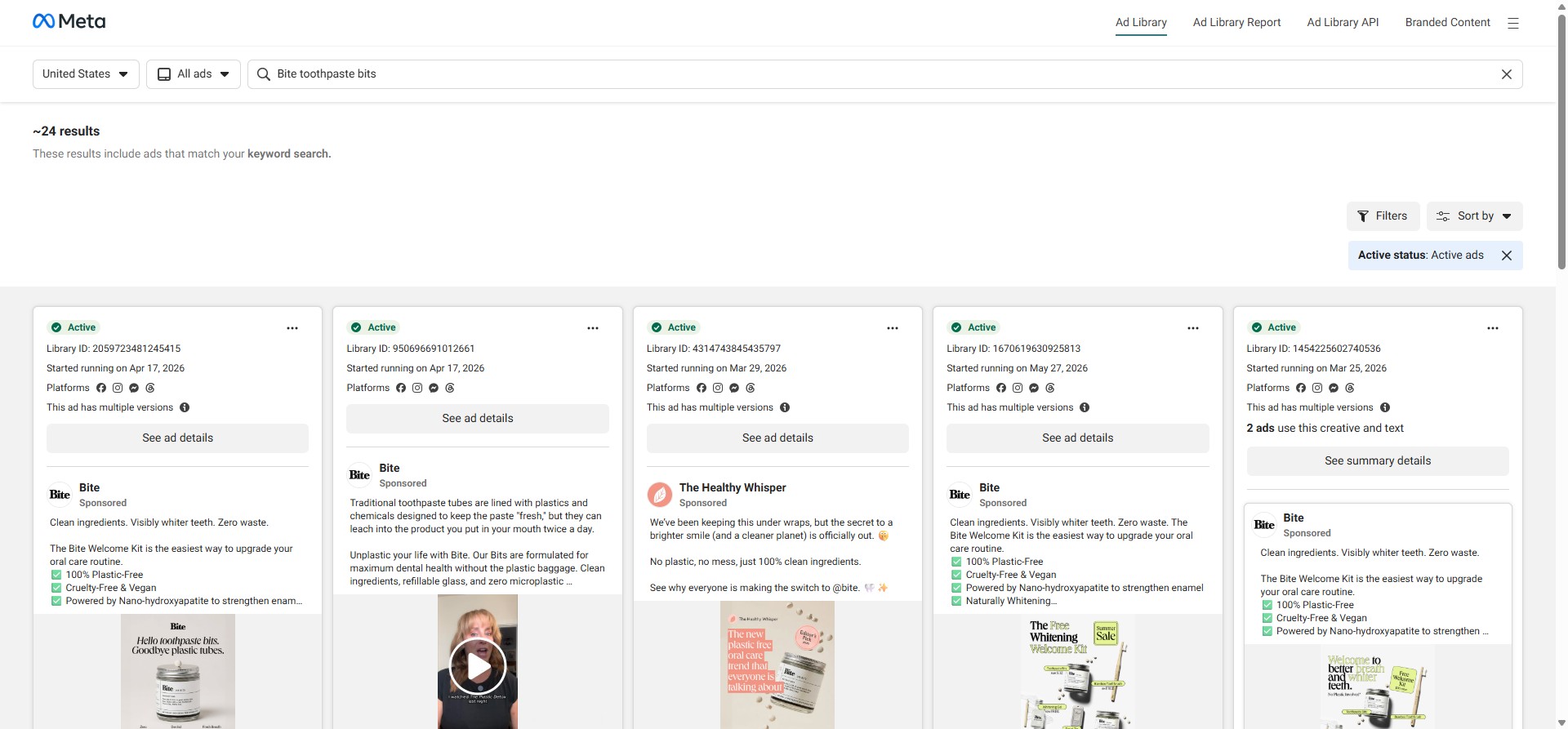
The Bite Welcome Kit is the easiest way to upgrade your oral care routine. 100% Plastic-Free. Cruelty-Free & Vegan. Powered by Nano-hydroxyapatite to strengthen enamel. Naturally Whitening. Hello, goodbye plastic tubes.
Shop NowTeardown
The Bite Welcome Kit creative is a product-led counterpart to Bite's problem-agitation education campaigns. Where the companion ad leads with the harm ("Stop brushing with plastic") and builds the brand as the solution, this ad leads with the solution itself — clean ingredients, white teeth, zero waste — and trusts the product shot to carry the creative weight. The three-claim headline ("Clean ingredients. Visibly whiter teeth. Zero waste.") is structurally a benefit triple, each element targeting a different buyer motivation: ingredient-conscious buyers, results-oriented buyers, and sustainability buyers. The ad does not have to pick one — it claims all three simultaneously, and the product shot supports all three claims without contradiction.
"Hello, goodbye plastic tubes" is one of the more elegant taglines in the sustainable oral care category. The structure plays on the conversational greeting — hello (to Bite, to a new product, to a new habit) and goodbye (to the tubes, to the plastic, to the old way). The comma forces a beat between hello and goodbye that makes the phrase feel like a decision moment. This is brand voice advertising: the line doesn't explain features, it performs a goodbye ritual on behalf of the buyer who is ready to make the switch. For a buyer who has been considering Bite but hasn't converted, this kind of brand voice line can be the creative that tips them over.
The product photography shows the Bite jar — glass, minimalist, premium — which does significant work as an aesthetic argument. In the bathroom environment, plastic toothpaste tubes are designed for function without concern for visual appeal. The Bite jar is designed to be displayed. It has the visual language of a skincare product or a supplement — something you'd keep on your vanity rather than hide under the sink. For a consumer who cares about their home aesthetic, this product design communicates that switching to Bite is also an upgrade in how their bathroom looks and feels.
The product claims checklist structure — "100% Plastic-Free. Cruelty-Free & Vegan. Powered by Nano-hydroxyapatite to strengthen enamel. Naturally Whitening." — serves a different function than the education-focused copy in Bite's problem-agitation ads. Here, the buyer has already been convinced that plastic toothpaste is a problem. The checklist is for the buyer who is evaluating Bite against other alternative oral care brands — fluoride-free natural toothpaste, charcoal whitening tabs, water-activated powder tabs. Against these alternatives, Bite's nano-hydroxyapatite formulation is a science-backed differentiator that positions the brand as the premium, evidence-based option in the sustainable oral care category.
The "Welcome Kit" framing is a deliberate first-purchase architecture. Rather than selling individual refill bits as a standalone product, Bite leads acquisition with a starter kit that includes the glass jar and an initial supply of bits. This is a subscription business model embedded in the product design: the kit creates the container, and the container needs to be refilled. New customers who purchase the Welcome Kit are structurally set up for ongoing refill purchases. The "Welcome Kit" name also signals that this is not just a product — it's an onboarding to a different way of doing oral care. The word "welcome" acknowledges that the buyer is joining something new, which is consistent with Bite's identity-based brand positioning.
Running both the problem-agitation video ad and the Welcome Kit product ad simultaneously is evidence of a mature funnel strategy: the education ad acquires buyers who need to be convinced the category exists, while the product ad closes buyers who already understand the value proposition and are ready to choose between brands. Both ads support the same conversion goal but from different psychological entry points.