Classic Duffel 35L
Teardown
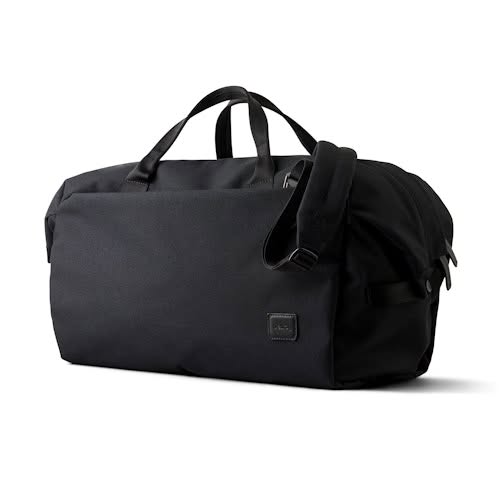
The Bellroy Classic Duffel ad is a product shot on white — one image, no lifestyle, no text overlay, no person. The bag sits at a three-quarter angle against pure white: matte black canvas, double handles, shoulder strap, front pocket, small Bellroy woven label. No environment. No context. That design choice is a positioning decision. At the price point where Bellroy's bags compete, lifestyle context can undermine the sale by narrowing the product's identity to a specific use case. A bag photographed in an airport implies a traveller. A bag photographed on white belongs to no archetype. It is available to be projected onto by whoever is looking at it.
The body copy reads: "Bonafide crowd-pleasers that slim your wallet, focus your mind and keep your day moving smoothly." Three verbs, three product categories, one sentence. "Slim your wallet" is the thin-wallet line. "Focus your mind" is the organizational ethos — Bellroy's founding insight is that visual organization reduces cognitive overhead. "Keep your day moving smoothly" is the logistics argument: fewer fumbled moments, less friction at the counter, the card that surfaces rather than needing to be excavated. The sentence covers the full Bellroy catalog without naming a single product, which is what allows the link card to pivot to the Classic Duffel 35L specifically. The body copy earns broad brand interest; the link card collects it at a specific SKU.
The link card description reads: "They're bestsellers for a reason. Wallets, bags, desk and tech accessories that keep your day sorted, and have our earned customers' seal of approval." "Earned" is the word that matters. A review rating is given. A star is awarded. An approval is "earned" — the passive construction implies customers chose to bestow it, unprompted, because the product merited it. That framing sidesteps the credibility gap that generic five-star-review claims have accumulated as the format has been gamed. Bellroy does not say sixty thousand people left a rating. It says the products earned a kind of trust that a rating system cannot fully encode. The distinction is subtle and the word choice makes it.
The product photographed is Bellroy's highest-AOV entry in the bag category. The copy does not mention price. Instead, it establishes catalog breadth — wallets, bags, desk, tech — and lets the Duffel serve as a draw for the full range. A buyer who arrives for a duffel and discovers a matching wallet and cable organizer in the same aesthetic family is the conversion Bellroy is building toward. That cross-sell is not in the ad. It is built into the Bellroy product ecosystem, which the landing page activates after the click. The ad's job ends at the click.
The black-on-white treatment completes the positioning argument. Matte black on white is visually neutral — it does not insist on being noticed. The small woven label on the front is the only visible brand mark. That restraint is itself the brand statement. The product is for the person who does not need others to recognize the logo to feel the quality. Bellroy is not selling status signaling. It is selling the private satisfaction of objects that function well and look right. The ad knows its buyer well enough not to try to impress them.